
Technical documents on airborne decontamination use extensive terminology, including English acronyms, microbiological terms, measurement units and regulatory references. The same term can sometimes have different meanings depending on the supplier. This glossary defines the terms associated with VHP and clarifies common misunderstandings. It helps prepare precise technical specifications and compare proposals without ambiguity. The definitions follow a logical order: process acronyms, levels of antimicrobial activity, measurement units, equipment and quality-related terminology.
The three acronyms for vaporised hydrogen peroxide
VHP stands for vaporized hydrogen peroxide. It refers to hydrogen peroxide vapour used as a decontamination agent.
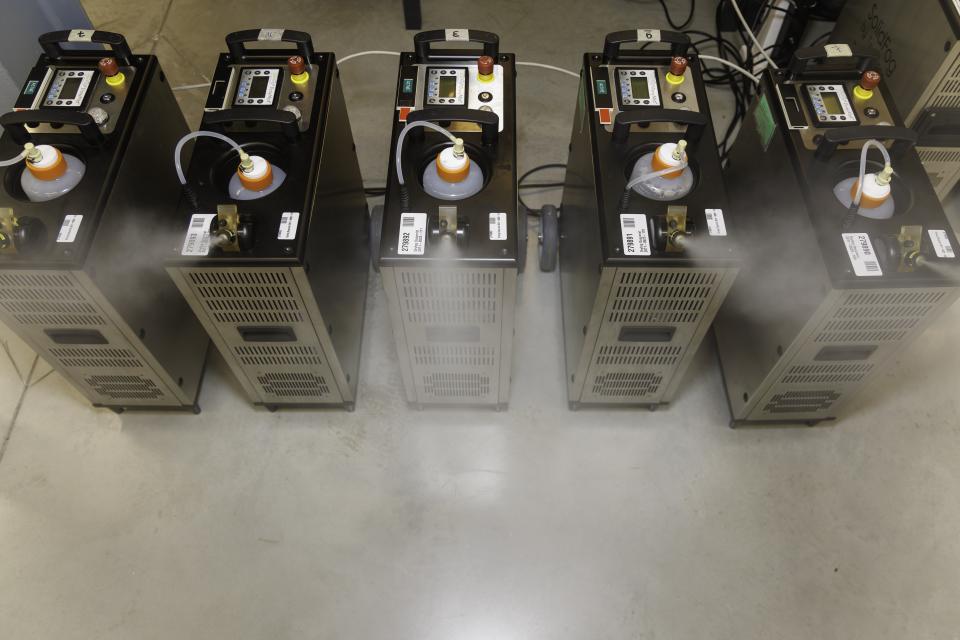
The acronym VH₂O₂ uses the chemical formula and refers to the same vapour in French technical documents. HPV stands for hydrogen peroxide vapor and is mainly used in English-language publications.
These three acronyms describe the same process. H₂O₂ alone refers to the molecule or liquid solution, rather than the vapour distributed throughout a room. The full term "vaporised hydrogen peroxide" remains the preferred wording in content intended for a general audience.
Cleaning, disinfection, decontamination and sterilisation
Four terms describe different levels of action on surfaces:
- Cleaning: the removal of visible dirt and residues, without a defined microbiological objective
- Disinfection: the reduction of microorganisms on a surface, with efficacy measured through standardised tests
- Decontamination: the reduction of contamination to a defined level, whether microbial, chemical or radioactive
- Sterilisation: the elimination of all viable microorganisms from a load, with a sterility assurance level of 10⁻⁶
The term biodecontamination refers to the reduction of biological contamination. A VHP cycle falls into this category. Sterilisation applies to loads and devices validated according to sterilisation standards, rather than to an entire room.
Airborne surface disinfection and biodecontamination
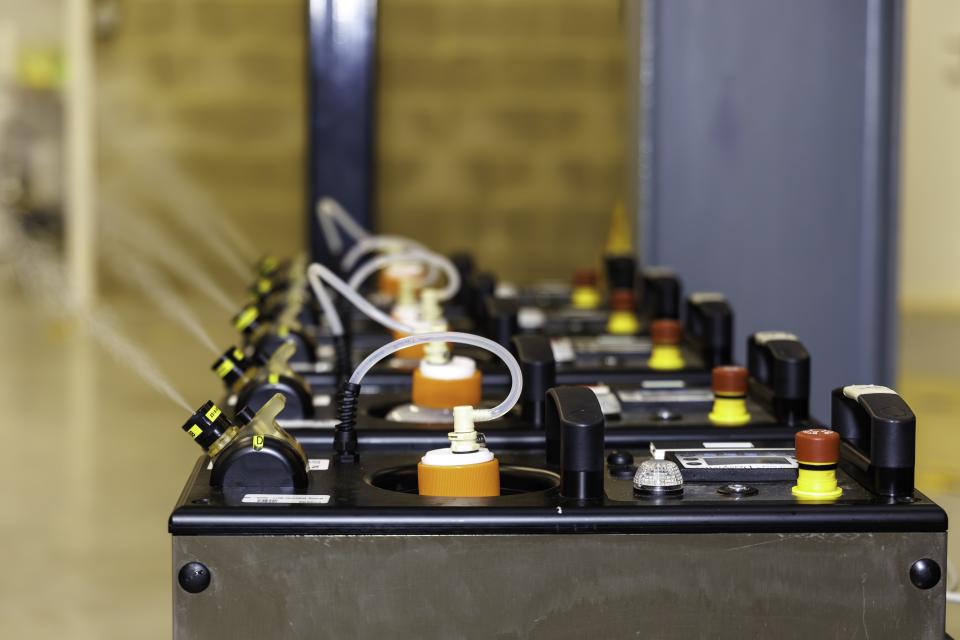
Airborne surface disinfection (ASD), known as DSVA in French, refers to an automated process that distributes a product in the form of a gas, vapour or mist within an enclosed space, without personnel present. VHP belongs to the family of airborne surface disinfection processes. Biodecontamination refers to the intended outcome: a controlled reduction in the microbial load of an area, equipment or materials.
Measurement units used with VHP
- ppm: parts per million by volume, a unit used to measure vapour concentration in air
- mg/m³: milligrams per cubic metre, a unit of mass per volume of air, with 1 ppm of hydrogen peroxide equivalent to approximately 1.4 mg/m³
- %: the concentration of the liquid solution in the reservoir, expressed as a percentage
- CFU: colony-forming units, used to quantify viable microorganisms by counting colonies grown on a culture medium
- °C and %RH: temperature and relative humidity, which influence vapour behaviour
A technical datasheet specifies the unit associated with each value. Confusing ppm with mg/m³ leads to inaccurate comparisons between two systems or exposure limits.
Equipment and areas associated with VHP
- Isolator: an enclosed system that separates the product from the operator, with gloves or sleeves integrated into its walls
- RABS: a restricted access barrier system, featuring a physical barrier and controlled access to the critical area
- Transfer airlock: an enclosed space used to introduce materials into a clean area without compromising separation
- Cleanroom: a controlled environment in which particulate and microbial contamination are regulated
- Grades A to D: the classification of clean areas used in sterile manufacturing under European GMP guidelines
Grade A corresponds to the critical zone for aseptic operations. Grades B, C and D correspond to progressively less critical areas.
Contamination and aseptic processing terminology
- Bioburden: the number of viable microorganisms present on a surface or in a product
- Cross-contamination: the transfer of microorganisms or residues from one product to another
- Asepsis: the measures taken to prevent the introduction of microorganisms into an area
- Aseptic manufacturing: the production of sterile medicinal products in a controlled environment, without terminal sterilisation of the packaged product
- Critical zone: the area where a sterile product is exposed to the working environment
- Deviation: a result that falls outside established acceptance criteria and triggers a documented investigation
These concepts explain why pharmaceutical facilities require reproducible decontamination of their critical areas.
Regulatory and documentation terminology
- GMP: Good Manufacturing Practice, the quality standards governing pharmaceutical manufacturing
- URS: User Requirements Specification, a document describing user needs before purchasing a system
- CCS: Contamination Control Strategy, a comprehensive approach to contamination control at a sterile manufacturing facility
- SDS: Safety Data Sheet, a document providing safety information about a chemical product
- CFR: Code of Federal Regulations in the United States, including Part 11 of Title 21, which governs electronic records
These terms frequently appear in qualification documentation and audits. Our article on EN 17272 and 6-log reduction explains how they apply to a VHP cycle.
Common terminology misunderstandings
- The acronym HPV also refers to human papillomavirus, so the context determines its meaning
- Liquid hydrogen peroxide and hydrogen peroxide vapour are subject to different requirements for use
- Decontamination is not the same as sterilisation, even when a cycle achieves a high level of microbial reduction
- An airborne surface disinfection system can distribute vapour, gas or mist, and these three forms act differently
- A concentration expressed in ppm in air does not have the same meaning as a percentage concentration in the reservoir