
A site choosing a decontamination method must compare several technologies: VHP, formaldehyde, ozone and peracetic acid fogging. Each method has a different profile in terms of efficacy, residues, cycle duration and operator safety. This article compares these four methods based on the criteria that matter in pharmaceutical, hospital and laboratory environments. It also outlines the limitations of VHP.
Comparison criteria
Six criteria form the basis of this comparison:
-
Sporicidal efficacy demonstrated using biological indicators
-
Residues remaining on surfaces after the cycle
-
Aeration and neutralization time
-
Compatibility with site materials
-
Operator safety
-
Process validation and traceability
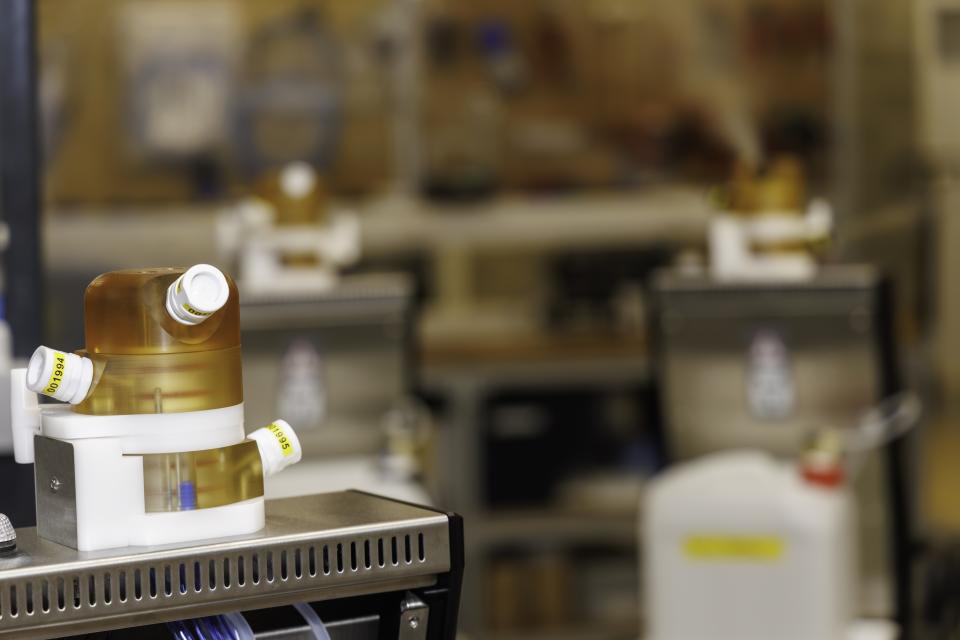
Formaldehyde: The traditional method
Formaldehyde fumigation has long been a reference method for decontaminating isolators and rooms. Formaldehyde is effective against spores but leaves paraformaldehyde residues on surfaces. Neutralization requires an additional step, often using ammonia, and aeration takes a long time. The International Agency for Research on Cancer classifies formaldehyde as carcinogenic to humans. These constraints are driving pharmaceutical sites to seek alternatives. The development of Solidfog technology began in response to a vaccine manufacturer's request for an alternative to formaldehyde fumigation.
Ozone
Ozone is a gas produced from oxygen in the air. Ozone acts through oxidation but requires high humidity levels to achieve its efficacy. The gas degrades certain elastomers and plastics, limiting its use in areas equipped with sensitive seals. Pharmaceutical sites generally have fewer references for sporicidal validation with ozone than with VHP. The gas decomposes into oxygen, leaving no chemical residue.
Peracetic acid fogging
Peracetic acid is effective against bacteria, viruses and spores. The process disperses the product as a fog throughout the room. It has a strong odor, and the product corrodes certain metals. The fog leaves acetic acid deposits on surfaces, requiring rinsing or wiping.
Chlorine dioxide and UV-C: Two limited alternatives
Chlorine dioxide is effective against spores but corrodes many metals and requires specific gas-handling procedures. UV-C radiation destroys microorganisms only on surfaces directly exposed to the radiation. Shadowed areas, the undersides of equipment and corners remain untreated. These two methods are more commonly used as supplementary treatments than as validated decontamination processes for aseptic areas.
Vapor, fog and spraying: Differences in principle
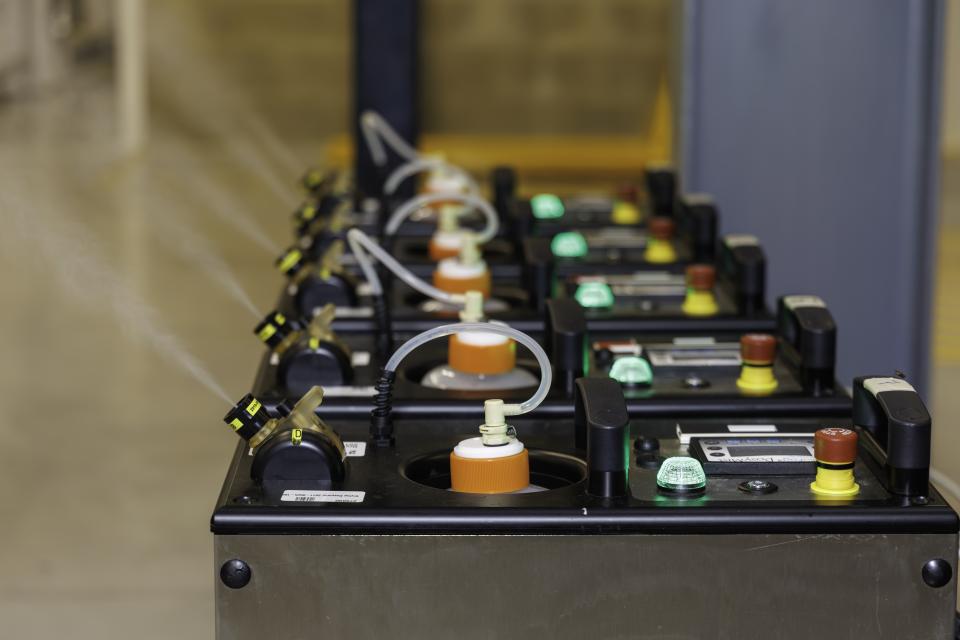
Manual spraying and fogging disperse the product onto surfaces in the form of droplets. VHP vapor behaves like a gas and fills the entire volume. It reaches corners, the undersides of equipment and vertical surfaces without operator intervention. The uniformity of fog distribution compared with vapor depends heavily on the process used and how it is implemented. Certain fogging technologies, such as the one developed by Solidfog, can achieve a very high level of distribution uniformity and reproducible product dispersion throughout the treated volume. This uniformity is an essential criterion for aseptic areas, where product distribution must remain reproducible.
VHP: Advantages and limitations
Advantages of VHP
-
Decomposition into water and oxygen, without toxic residues
-
Low-temperature operation, compatible with most electronic equipment
-
An automated, reproducible and documented cycle
-
Sporicidal efficacy demonstrated using biological indicators
-
Generally shorter aeration times than formaldehyde
Limitations of VHP
VHP requires an airtight enclosure to maintain the concentration. It does not penetrate porous materials, and cellulose-based materials, such as paper and cardboard, absorb the product and extend aeration time. It is less effective in deep or enclosed cavities. Certain metals and polymers may degrade after repeated cycles. Our article on material compatibility with VHP and our article on airtightness and containment explain these two constraints in detail.
Summary table of the four methods
| Method | Residues after cycle | Aeration and neutralization | Key consideration |
| VHP | Water and oxygen | Catalytic neutralization and ventilation | Airtightness, sensitive materials |
| Formaldehyde | Possible paraformaldehyde residues | Chemical neutralization, long aeration time | Carcinogenic classification |
| Ozone | Oxygen | Decomposition and ventilation | High humidity, elastomer degradation |
| Peracetic acid | Acetic acid | Rinsing or wiping | Odor, corrosion of certain metals |
Total cost: Investment, consumables and downtime
The cost of a decontamination method is not limited to the price of the equipment. It includes the product consumed during each cycle, generator maintenance, the time during which the area is unavailable and the cost of qualification. Long aeration times keep areas out of service and reduce production capacity. Each site must compare these cost factors over several years.
How to choose the right method for your site
-
A pharmaceutical site requiring validated sterility uses a VHP cycle qualified to achieve a 6-log reduction
-
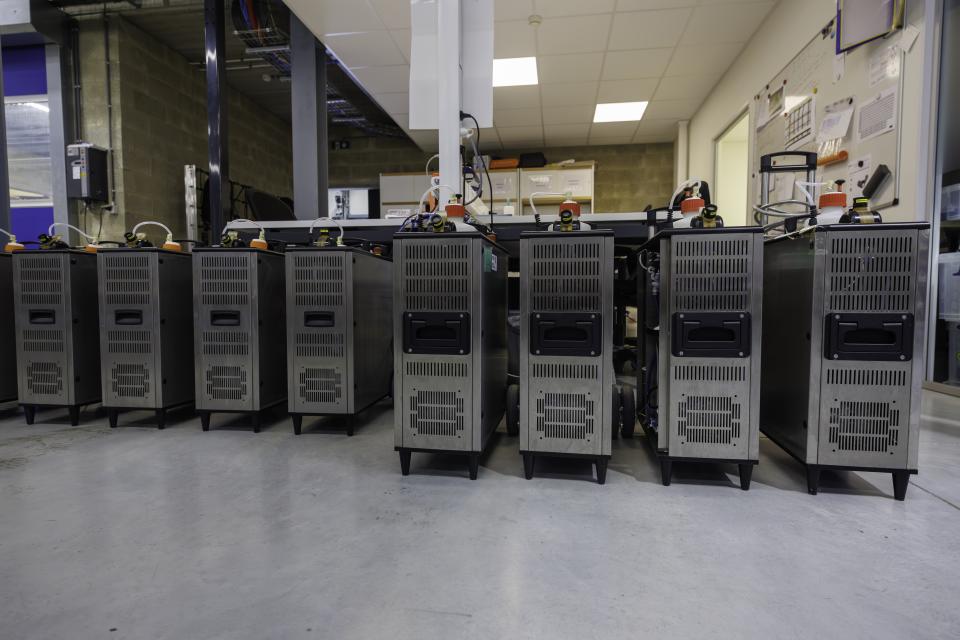
A site treating an isolator selects an integrated or connected VHP generator
-
A site treating several rooms compares mobile and centralized systems
-
A site with sensitive materials carries out a preliminary compatibility test
A site audit should precede any decision. This audit measures the volume, checks airtightness and identifies exposed materials.
Frequently asked questions about choosing a method
Can VHP replace an autoclave?
No. An autoclave sterilizes loads using moist heat, whereas VHP decontaminates the surfaces of a room or piece of equipment.
Can formaldehyde be replaced by VHP in an existing isolator?
Yes, in most cases, following a material compatibility assessment, interface adaptation and requalification of the cycle.
Solidfog and the transition to VHP
Solidfog supports sites transitioning from formaldehyde fumigation to a VHP process. The team conducts a site audit, recommends the appropriate system from the DosyMist® range, qualifies the cycle and trains operators. Its consultancy services help define requirements, prepare the User Requirements Specification (URS) and manage the qualification process.