
Airborne surface disinfection, also known as ASD, refers to a microbiological decontamination process that uses a biocidal agent dispersed as airborne particles. This process enables the treatment of all surfaces within an enclosed area, including walls, ceilings, equipment, and hard-to-reach zones, without manual intervention.
ASD has become a technical solution for environments with high criticality requirements where conventional cleaning methods are no longer sufficient.
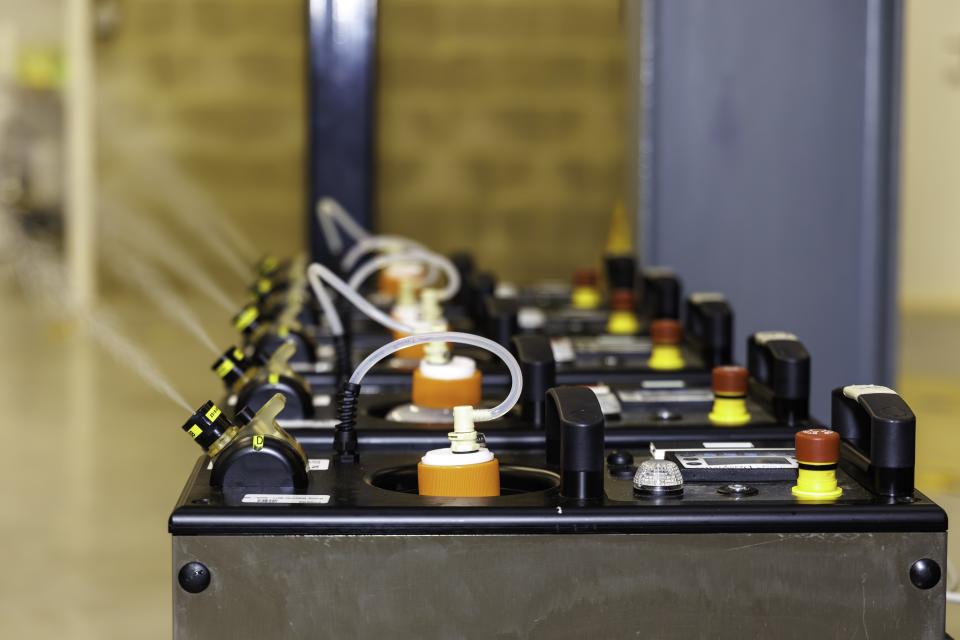
How airborne surface disinfection works
Airborne surface disinfection relies on the diffusion of a biocidal agent in the form of microdroplets or vapor within a closed environment. The agent settles on accessible surfaces and acts through direct contact with microorganisms.
The process is divided into several phases:
- Preparation phase: the area is secured and cycle parameters are defined. Unlike certain VHP technologies, some VH₂O₂ ASD processes do not require pre-conditioning of temperature or humidity.
- Diffusion phase: the biocidal agent is evenly dispersed throughout the treatment area to reach all exposed surfaces.
- Contact phase: the biocidal agent remains active for a defined period to achieve the required microbiological reduction level.
- Aeration phase: the area is ventilated until residual levels are compatible with safe re-entry.
This sequence ensures cycle reproducibility as well as compliance with qualification and validation requirements.
Hydrogen peroxide: a reference biocide for ASD
Among the biocidal agents used in airborne surface disinfection, hydrogen peroxide has become a reference solution in regulated environments. It is progressively replacing older practices such as formaldehyde fumigation, which are considered too toxic and difficult to control.
Why is VH₂O₂ preferred in airborne surface disinfection?
VH₂O₂ offers several characteristics that explain its widespread adoption in pharmaceutical, healthcare, and biotechnology sectors:
- Broad-spectrum efficacy against bacteria, spores, viruses, and fungi.
- Decomposition into water and oxygen after the cycle, leaving no persistent toxic residue.
- Compatibility with GMP requirements and documented validation processes.
- Ability to achieve log-6 microbiological reductions, corresponding to a 99.9999% reduction of targeted microorganisms.
These properties make VH₂O₂ a suitable biocide for environments where contamination control is critical.
Environments using airborne surface disinfection
ASD is used in sectors where microbiological contamination represents a direct risk to product quality, patient safety, or process integrity.

Pharmaceutical and biotechnology industries
Cleanrooms, sterile areas, and aseptic production isolators require validated decontamination cycles between manufacturing campaigns. Airborne surface disinfection is used to reduce cross-contamination risks and support compliance with Good Manufacturing Practices (GMP).
Healthcare and research facilities
Operating rooms, microbiology laboratories, biological safety cabinets (BSCs), and laminar airflow hoods are subject to regular decontamination protocols. ASD enables complete and traceable treatment of these environments, including hard-to-access areas.
Quality control laboratories
Laboratories handling pathogens or sensitive substances integrate airborne surface disinfection into their contamination control strategy. This process provides reproducible and documented results.
Standards and regulatory requirements applicable to ASD
Airborne surface disinfection is governed by international standards defining performance criteria and validation methods.
EN 17272:2020 is the reference standard for automated airborne surface disinfection processes. It specifies testing methods, application conditions, and expected efficacy levels.
In pharmaceutical and GMP environments, ASD systems must also integrate broader quality and regulatory requirements, including:
- ISO 9001:2015 for quality management systems,
- 21 CFR Part 11 for electronic data traceability and integrity,
- DQ, IQ, OQ, and PQ qualification protocols required in regulated environments.
Compliance with these requirements contributes to the validation and conformity of decontamination processes.
How to choose an airborne surface disinfection system
Choosing an ASD system depends on several technical parameters specific to the environment being treated.
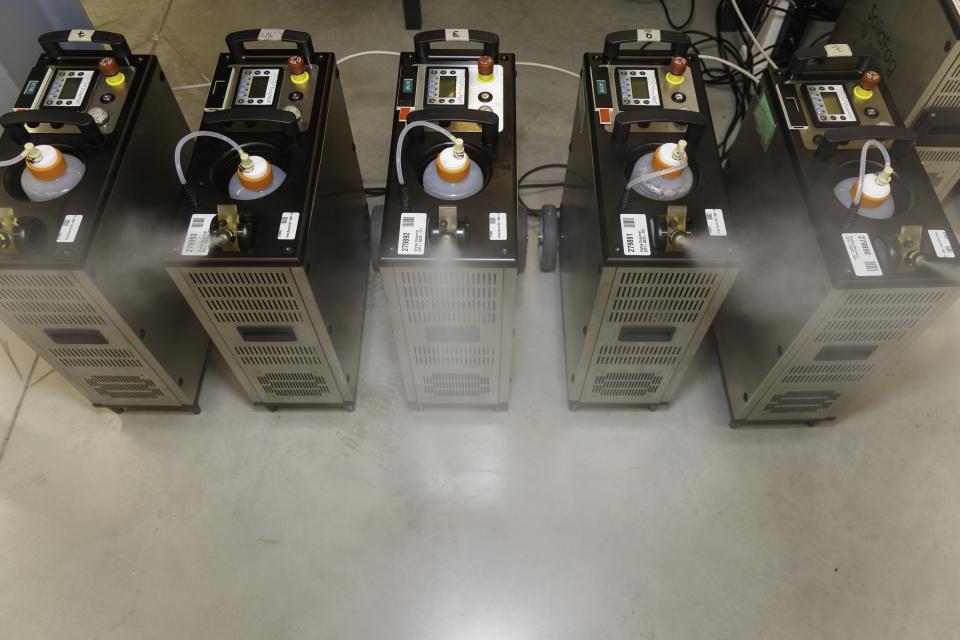
Parameters to evaluate before implementing ASD
- Treatment volume: large spaces require equipment capable of ensuring homogeneous biocide distribution.
- Airflow constraints: air circulation directly impacts particle distribution within the environment.
- Required decontamination level: cycle parameters vary depending on whether the objective is standard disinfection or log-6 reduction.
- Validation requirements: in regulated environments, the system must generate traceable and auditable data.
The importance of technical support
Implementing an airborne surface disinfection process goes beyond equipment installation. It requires cycle development, qualification, and documented validation phases. An experienced technical partner identifies optimal injection points, defines cycle parameters, and provides the qualification deliverables expected by regulatory authorities.
SolidFog: airborne surface disinfection expert for more than 20 years
For more than 20 years, SolidFog has been developing, manufacturing, and validating VH₂O₂ airborne surface disinfection systems. Based in Ciney, Belgium, the company supports pharmaceutical, healthcare, and biotechnology organizations in the design and qualification of ASD processes.
SolidFog designs its equipment in-house, ensuring complete traceability, full control over the manufacturing process, and compliance with the industry’s strictest standards.