
The efficacy of a VHP cycle depends on the target microorganism, the vapor dose received and the condition of the surfaces. Hydrogen peroxide acts against a broad spectrum of microorganisms, but each group has its own level of sensitivity. This article describes the mechanism of action, spectrum of activity, resistance hierarchy and factors that influence results under real-world conditions.
The mechanism of action of hydrogen peroxide
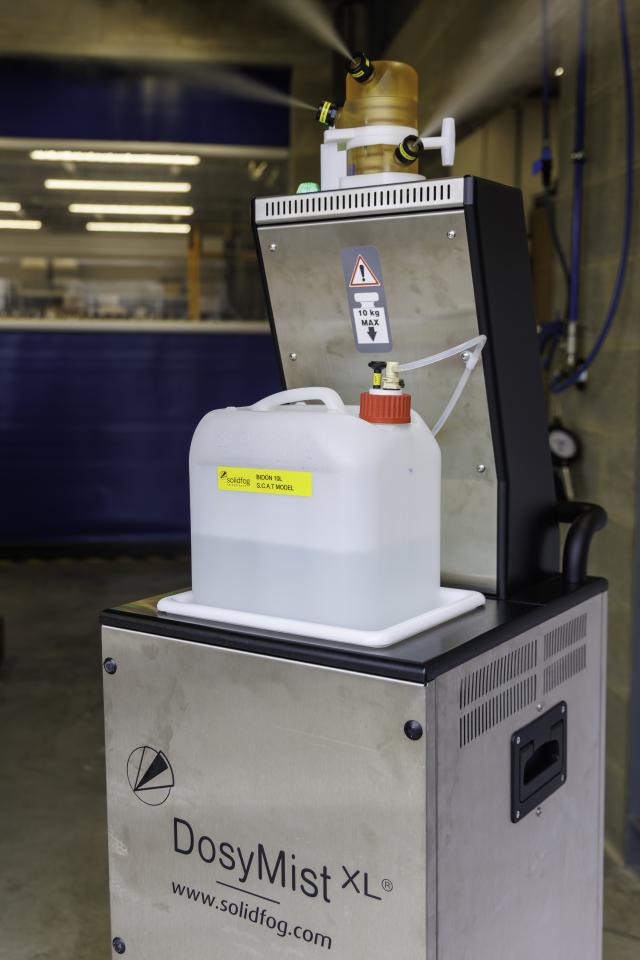
Hydrogen peroxide is a powerful oxidizing agent. It reacts with biological compounds and generates free radicals, including hydroxyl radicals. These radicals attack proteins, membrane lipids and the nucleic acids of microorganisms. This action destroys cellular structures and prevents reproduction. The mechanism targets several cellular components simultaneously, limiting the risk of acquired resistance.
A spore protects its core with several protective layers. Hydrogen peroxide must penetrate these layers to reach the core. This barrier explains why longer contact times are required for spores.
The spectrum of activity of VHP
VHP acts against five major groups of microorganisms.
Vegetative bacteria
Vegetative bacteria, such as Staphylococcus aureus or Pseudomonas aeruginosa, are highly sensitive to VHP. A short holding phase is sufficient to reduce their population by several logarithmic levels. These bacteria frequently colonize moist surfaces in healthcare environments.
Mycobacteria
Mycobacteria, such as Mycobacterium tuberculosis, have a lipid-rich cell wall that slows the penetration of chemical agents. Their inactivation requires a higher vapor dose than vegetative bacteria. Tuberculosis laboratories therefore use a holding phase adapted to this group.
Enveloped and non-enveloped viruses
Enveloped viruses, such as coronaviruses and influenza viruses, are susceptible to oxidation of their lipid envelope. Non-enveloped viruses, such as adenoviruses and noroviruses, require a higher dose. This difference is due to the absence of a lipid envelope, which is particularly susceptible to oxidation.
Fungi, yeasts and molds
Yeasts and vegetative forms of fungi respond well to VHP. Fungal spores require longer contact times. This group includes Candida albicans and Aspergillus brasiliensis, two reference microorganisms used in disinfection efficacy testing.
Bacterial spores
Bacterial spores require a significantly higher vapor dose than other groups. Their thick protective layers and dehydrated core limit the action of the product. Spores are therefore used as reference microorganisms for cycle validation. A cycle that inactivates spores aims to achieve a higher level of efficacy than one targeting more sensitive microorganisms.
The resistance hierarchy of microorganisms
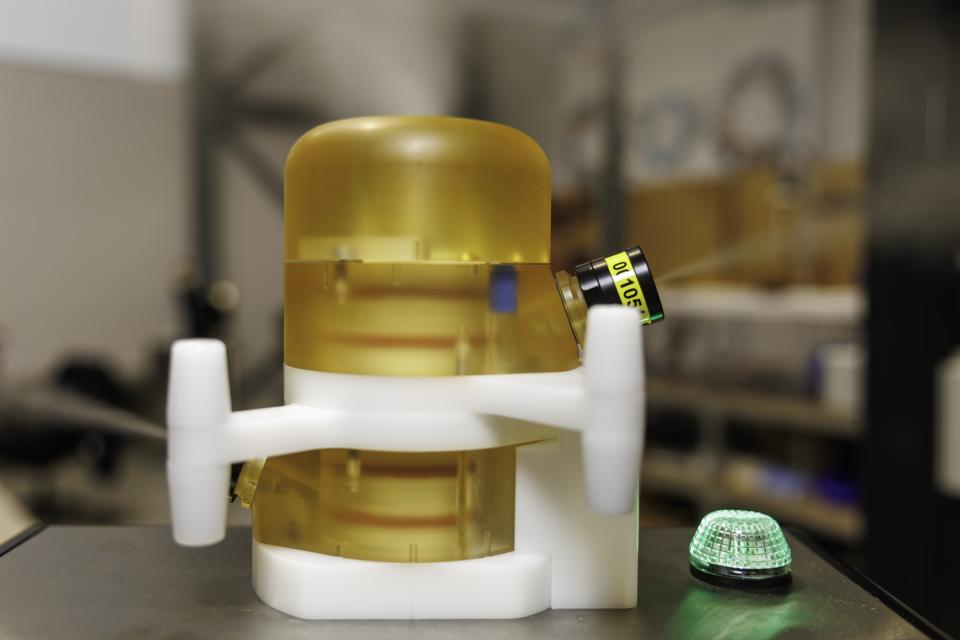
Microbiology classifies microorganisms according to their resistance to chemical agents. The general resistance hierarchy, from prions to enveloped viruses, is as follows: prions, bacterial spores, mycobacteria, non-enveloped viruses, fungi, vegetative bacteria and enveloped viruses. This hierarchy is indicative, as resistance varies depending on the species and the chemical agent used. Prions require specific processes that fall outside the scope of a standard VHP cycle. A cycle validated against bacterial spores therefore aims to achieve a higher level of efficacy than one targeting groups lower in the resistance hierarchy.
The relationship between dose and contact time
Biocidal efficacy depends in part on hydrogen peroxide concentration and contact time, but these two parameters alone are not sufficient to determine the effectiveness of a VHP cycle. A lower concentration maintained for a longer period may, to some extent, achieve results comparable to a higher concentration maintained for a shorter period. Efficacy also depends on temperature, humidity, distribution uniformity, surface characteristics and their exposure to the product. Vapor saturation limits this flexibility. The technician takes all these parameters into account during cycle development and subsequently validates the cycle using biological indicators.
Selecting the target reduction level according to risk
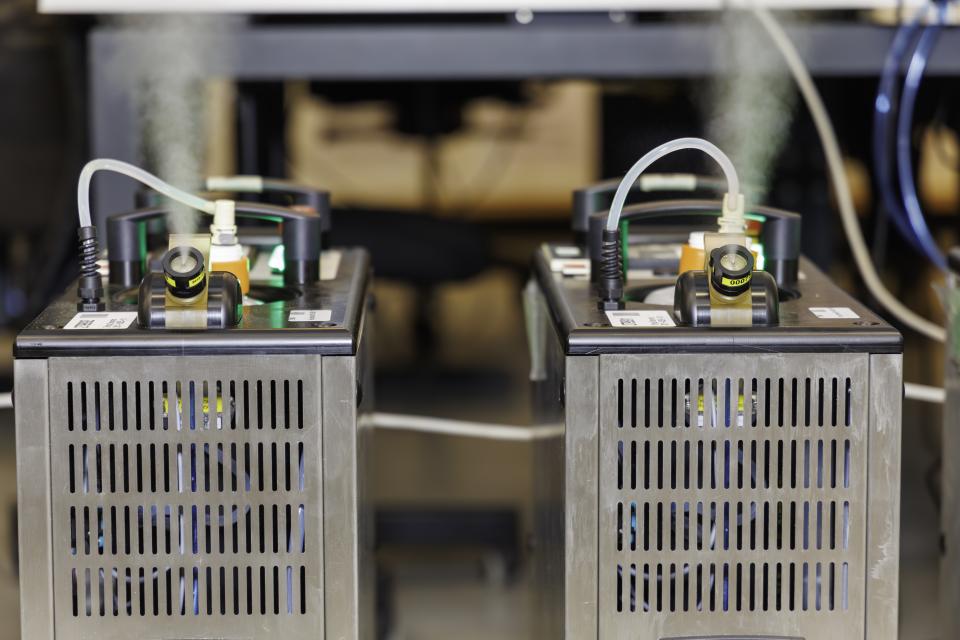
Each application establishes a target reduction level based on risk. A healthcare area aims to achieve a reduction of several logarithmic levels for bacteria and viruses. An aseptic area targets a 6-log reduction in bacterial spores. The target level is determined by a site-specific risk assessment rather than a universal value. A higher target reduction level requires adjustments to cycle parameters, including concentration and contact time, as well as distribution conditions and surface exposure.
Factors influencing efficacy under real-world conditions
Six factors influence the results of a VHP cycle in a real-world environment:
-
Organic load, such as blood, proteins or culture residues, which consumes part of the hydrogen peroxide
-
Surface type: a smooth, non-porous surface is easier to treat than a rough surface
-
The density of the microbial population present on the surface
-
The presence of biofilms, which protect microorganisms within a matrix
-
Surface exposure to vapor: an object shielded by another receives a lower dose
-
Temperature and humidity, which affect vapor distribution
Preliminary cleaning reduces organic load and biofilms. VHP complements cleaning and does not replace it.
Defining the spectrum of activity in the specifications
The User Requirements Specification (URS) for a VHP project defines the target group of microorganisms, the expected reduction level and the surfaces to be treated. An aseptic manufacturing site targets bacterial spores. A site treating a healthcare area primarily targets bacteria and viruses. These requirements guide the selection of biological indicators and all cycle parameters, including the duration of the holding phase. Solidfog's consultancy service helps sites define these criteria before purchasing equipment.