

Airborne surface disinfection relies on a structured cycle and controlled parameters. Each phase influences the microbiological outcome. A DSVA follows a controlled sequence, including an injection phase, an exposure period and an aeration phase. Understanding how it works helps secure operations in critical environments. This page presents the principle of the process, the cycle stages and the essential parameters.
The principle of a DSVA with VH₂O₂

DSVA uses hydrogen peroxide in nebulized form within a closed volume. The system generates a dry fog of VH₂O₂. The product is then distributed throughout the treated space. It acts on the micro-organisms present on exposed surfaces according to a programmed cycle.
This method is applied in controlled environments such as cleanrooms and laboratories. It is integrated into a contamination control strategy. The cycle relies on controlled parameters to ensure consistent treatment. The level of process control remains a central aspect, as it influences the repeatability and traceability of operations.
The different phases of a DSVA cycle
A DSVA cycle follows a precise sequence. Each phase meets a defined objective. The entire process must remain controlled to ensure treatment consistency.
Room preparation before the DSVA cycle
The room must be prepared before starting the cycle. Openings must be closed and ventilation systems configured according to the protocol. Temperature and relative humidity must remain appropriate for the treated volume. These conditions influence the stability of the fog and the performance of the process.
Injection and dispersion of VH₂O₂ in the treated volume
The generator injects a defined quantity of hydrogen peroxide. The system controls injection parameters to reach a target concentration. Dispersion must remain uniform throughout the treated volume. The configuration of the room influences this distribution.
Hydrogen peroxide exposure time
After injection, VH₂O₂ remains in the room for a defined period. This phase corresponds to the microbiological action of the process. The duration depends on the parameters defined during cycle qualification. The stability of this exposure time determines reproducibility.
Aeration phase and return to controlled conditions
The cycle ends with a controlled aeration phase. The concentration of VH₂O₂ gradually decreases. The product decomposes into water and oxygen. The room then returns to conditions compatible with re-entry according to internal procedures.
Critical parameters of a DSVA cycle
A DSVA cycle relies on precise technical parameters. Their control influences the effectiveness and repeatability of the treatment.
VH₂O₂ concentration according to the treated volume
Concentration depends on the volume and configuration of the room. Equipment present in the space can influence fog dispersion. The system must apply a quantity consistent with the objectives of the cycle. An imbalance may alter the performance or duration of the treatment.
Room temperature and relative humidity
Temperature influences fog stability. Relative humidity affects the behavior of hydrogen peroxide in the air. These parameters must remain within a defined range. Any deviation may affect cycle consistency.
Control and traceability of DSVA cycle parameters
Each phase of the cycle must be controlled and recorded. Traceability makes it possible to document biodecontamination operations. This control supports the reproducibility of treatments in regulated environments.
The importance of a controlled cycle in critical environments
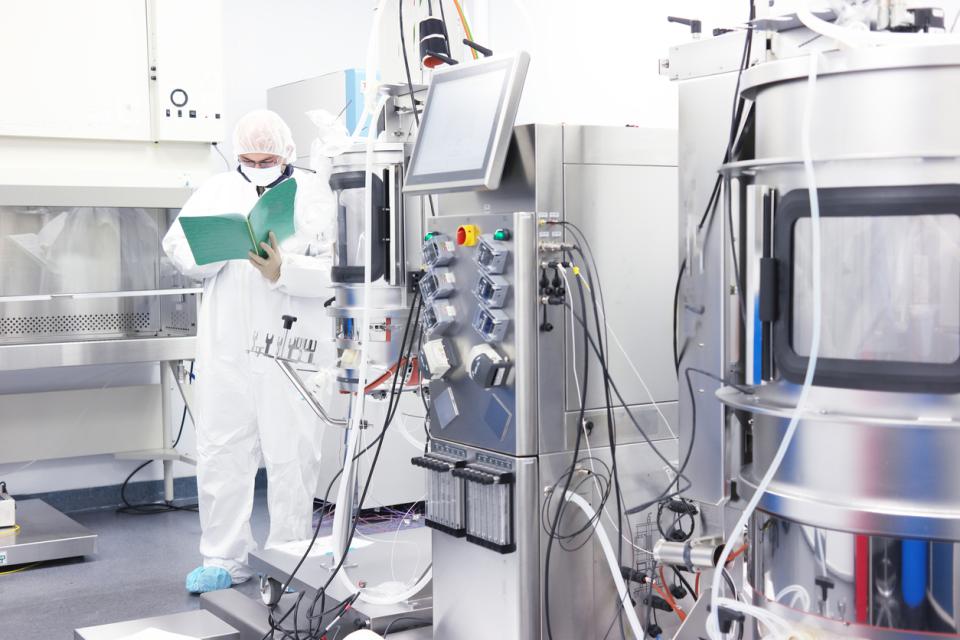
Pharmaceutical, biotechnology and research environments impose strict requirements. Classified areas must comply with defined cleanliness levels. Microbiological control is a major issue for process quality and operational safety.
DSVA acts as a complementary method to manual cleaning. It treats a closed volume in a structured manner. It helps limit variations related to manual practices. Validation of parameters and cycle repeatability strengthen operational reliability. A controlled cycle also facilitates the management of interventions, as decisions can rely on traceable cycle data.
Why choose Solidfog for your DSVA project?
Solidfog develops solutions dedicated to biodecontamination with VH₂O₂. The company focuses its expertise on cycle control in regulated environments.
Expertise dedicated to VH₂O₂ biodecontamination
Solidfog designs systems specialized in DSVA. This specialization supports a precise and structured technical approach.
Solutions adapted to regulated environments
The equipment integrates into cleanrooms and laboratories. Cycles rely on programmable and controlled parameters.
Technical support to secure your cycles
Solidfog supports the definition and implementation of cycles. This approach promotes sustainable process control.
Contact Solidfog to define your DSVA cycle
Would you like to implement DSVA adapted to your environment? Contact Solidfog to define your biodecontamination strategy and secure your cycles.
CTA: Contact us