
A VHP generator converts a liquid hydrogen peroxide solution into vapor, distributes this vapor throughout an enclosed space, and then neutralizes the residual product at the end of the cycle. Each stage relies on specific equipment and a set of sensors. This article describes the generator's components, the four phases of the cycle, the two vapor regimes, and the available system configurations. It presents an architecture representative of certain VHP generators, although components and control methods may vary depending on the technology used. It provides the technical knowledge needed to interpret a specification sheet and compare two systems.
The components of a VHP generator
Some VHP generators are based on an architecture comprising six functional components :
- A reservoir or cartridge containing the hydrogen peroxide solution
- A dosing pump that delivers the liquid to the vaporizer
- A heated vaporizer that converts the liquid into vapor
- A fan and nozzles that distribute the vapor throughout the space
- A catalytic converter that neutralizes residual hydrogen peroxide
- A controller and interface that manage the sequence and record data
Each component influences cycle reproducibility. The dosing pump determines the quantity of product injected, while the vaporizer determines the quality of the vapor. However, the presence of these components and how they operate may differ depending on the technology used to generate and distribute hydrogen peroxide.
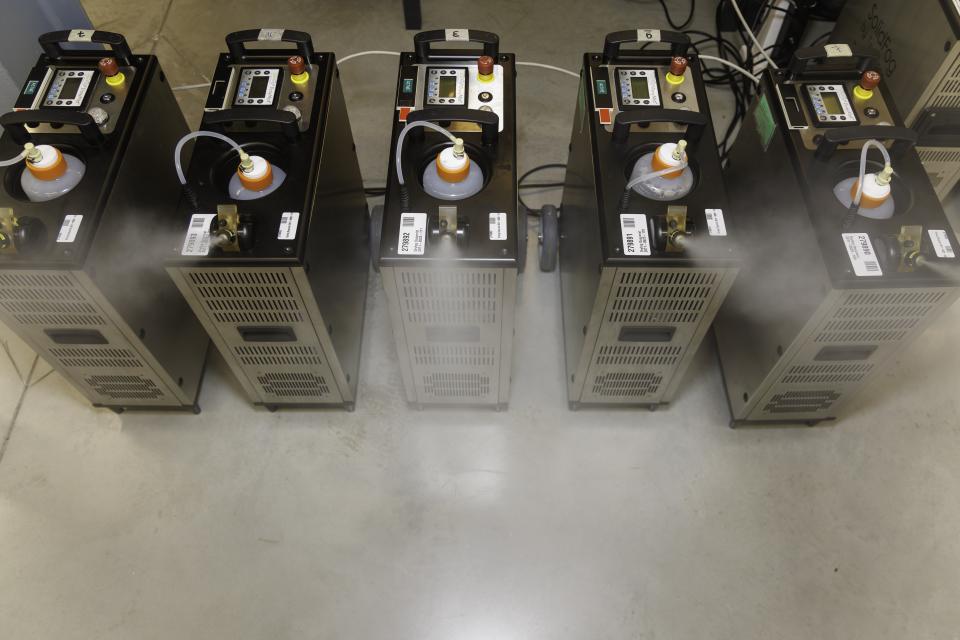
Vaporization of the solution
In generators that use a heated vaporizer, the reservoir contains an aqueous hydrogen peroxide solution, generally at a concentration of between 30% and 35%. The dosing pump delivers a controlled flow of liquid to the vaporizer. The vaporizer heats the liquid until it evaporates completely, producing vapor composed of hydrogen peroxide and water. A consistent flow rate ensures a steady increase in concentration within the space. An irregular flow rate creates concentration variations between cycles.
The four phases of a VHP cycle
A VHP cycle follows a fixed sequence of four phases. Each phase serves a specific purpose.
Conditioning
The generator measures the temperature and humidity of the space, then adjusts the initial conditions. Some systems reduce relative humidity before injection, expanding the available concentration range.
Injection
In systems equipped with a vaporizer, the vaporizer injects vapor and increases the concentration until the target value is reached. Internal ventilation distributes the vapor across surfaces. The duration of this phase depends on the volume being treated.
Holding phase
The system maintains the target concentration for a period defined during qualification. This duration ensures sufficient contact time between the vapor and the surfaces.
Aeration and neutralization
In systems equipped with a catalytic converter, the catalytic converter breaks down hydrogen peroxide into water and oxygen, while ventilation renews the air within the space. Sensors confirm that the concentration has fallen below the occupational exposure limit, which is around 1 ppm over eight hours in many regulations.
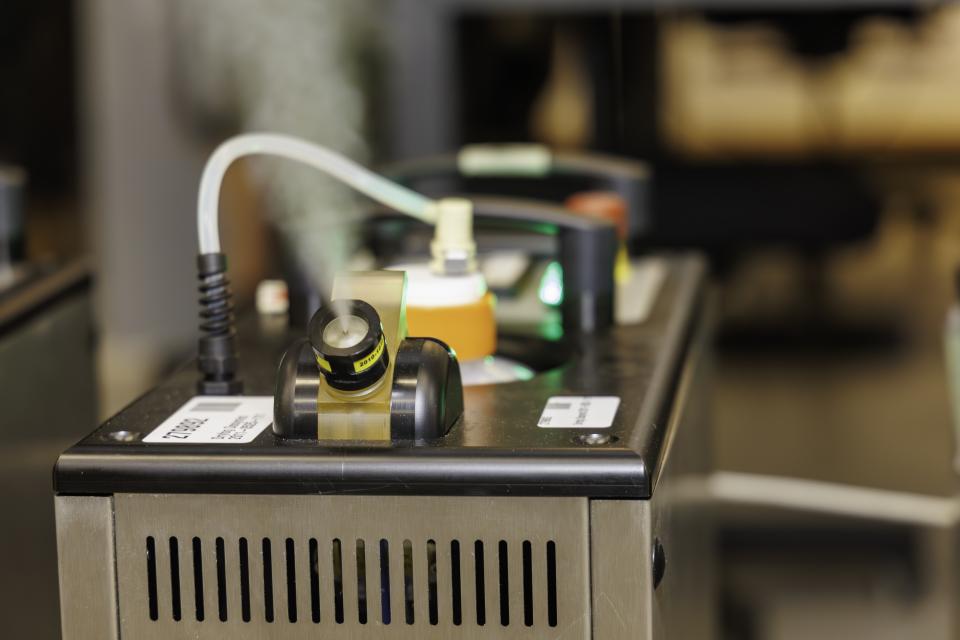
Sensors and cycle control
Depending on the technology used, the generator may rely on sensors to control the cycle through a closed-loop system. A concentration sensor measures hydrogen peroxide in the air. Temperature and relative humidity sensors monitor vapor conditions. The controller compares the measurements with the setpoints and adjusts the injection flow rate. It also records each measurement with a timestamp, forming the basis of the cycle documentation. The parameters measured and the control methods may vary from one system to another. Our article on the biocidal efficacy of VHP explains how these measurements translate into vapor dosage.
How to read a VHP generator's technical specifications
Six specifications make it possible to compare two generators:
-
The maximum concentration achievable within the space
-
The maximum volume treated per cycle
-
The solution injection flow rate
-
The vapor regime: dry or with micro-condensation
-
The neutralization method: catalytic, ventilation-based, or a combination
-
Communication interfaces and data recording capabilities
These values must be considered together. A high maximum treatment volume requires an appropriate injection flow rate, while a micro-condensation regime requires a suitably designed aeration phase.
Parameters set by the technician
Depending on the generator's technology and control method, the technician may define the following parameters during cycle development:
-
The target hydrogen peroxide concentration in the air
-
The duration of the holding phase
-
The injection flow rate
-
The initial temperature and humidity conditions
-
The maximum aeration duration
-
The concentration threshold allowing re-entry
These parameters remain fixed after qualification. Any modification requires the cycle to be verified again.
Dry VHP and VHP with micro-condensation
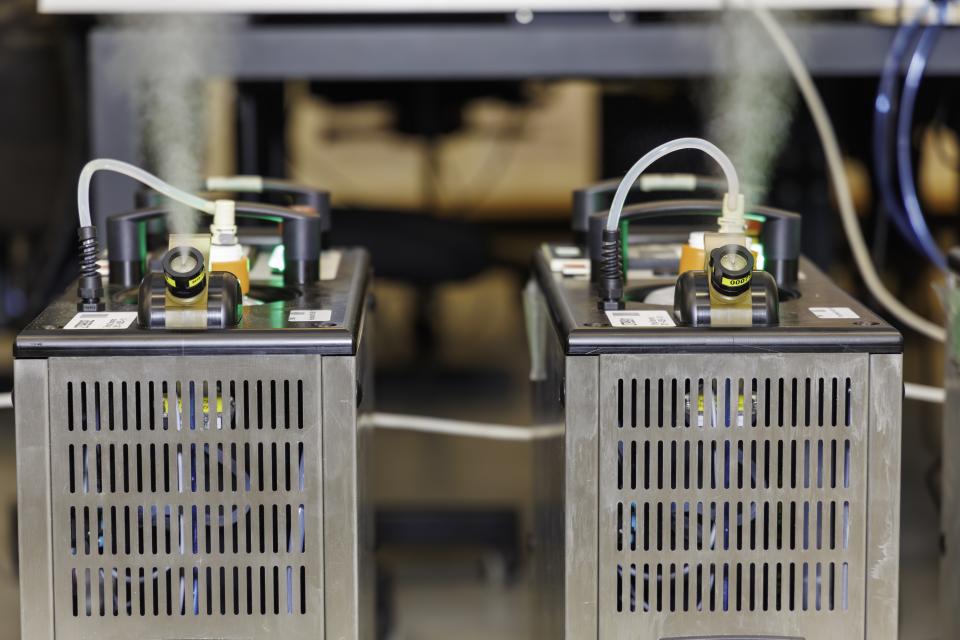
Hydrogen peroxide vapor behaves differently depending on the temperature and humidity of the space. Above the saturation point, the vapor condenses on surfaces. Two operating regimes exist depending on this threshold. In the dry regime, the concentration remains below saturation, and no liquid film forms. In the micro-condensation regime, a very thin film forms on surfaces, enhancing sporicidal activity. The regime influences aeration time because the liquid film must disappear at the end of the cycle. The supplier specifies the operating regime of its cycles in the qualification documentation.
Dedicated, mobile or centralized generators
Three system configurations meet different site requirements:
-
A dedicated generator, installed near a single area, simplifies organization and reduces preparation time
-
A mobile generator, moved between several rooms, treats multiple areas using a single unit
-
A centralized system connects several areas to a common unit and automates the sequence
The choice depends on the number of areas and the frequency of cycles. The OEM Kit offers a fourth option: it integrates the generator into third-party equipment, such as an isolator.
Solidfog VHP generators
Solidfog offers its generators under the DosyMist® brand. DosyMist® provides a compact and precise solution, DosyMist CS® automates the cycle to reduce human intervention, and DosyMist XL® treats large-volume environments. DosyMist Centralisé Mobile® combines centralized and mobile system configurations. Solidfog manages the design, manufacturing and validation of these systems in-house, facilitating the traceability of cycle documentation.